- Pilates vs. Barre: What’s the Difference—and Which Workout Is Right for You? - September 18, 2026
- Trending: Crew Grip Socks - January 12, 2022
- Chat with Founder of Ro & Arrows, Colleen Kirtz - May 21, 2021

Pilates vs. Barre
Pilates vs. Barre: The Quick Answer
The biggest difference between Pilates and barre comes down to how you move.
Pilates is all about controlled, coordinated exercises, core engagement and seriously good alignment. Barre mixes ballet-inspired positions with tiny reps, pulses and muscle-burning holds.
Pilates might be your thing if you like precise movement, mat work or reformer classes. Barre may win you over if you prefer music-driven workouts, standing exercises and the kind of muscle fatigue that sneaks up on you. Both can challenge your balance, stability and strength—and both offer beginner-friendly options when the class level and instruction are right.
The shared experience? Walking in feeling cute and finding out just how long one minute can last. Here’s how to choose your kind of challenge—and the grip socks coming along for the ride.
What Is Pilates?
Pilates is a full-body movement practice built around control, breathing and thoughtful technique. Your core helps stabilize your body while your arms and legs move, but this is not just an abs workout. Your back, hips, glutes and shoulders all get in on the action too.
Instead of racing through reps, Pilates asks you to pay attention to how you move. Keeping your pelvis steady during a leg exercise, for example, can be much harder than simply making the movement bigger. It’s the workout equivalent of “let’s slow down and do that properly.” Your core has been cc’d.
There are two common formats:
- Mat Pilates uses your body weight and gravity for resistance. Classes may add small props such as resistance bands, balls or a Pilates ring.
- Reformer Pilates uses a machine with a sliding carriage, springs, straps and a footbar. Depending on the exercise and setup, the springs can provide resistance or assistance, while the moving carriage adds an extra control challenge.
You may also see hot Pilates, which takes place in a heated room. The name can cover different formats, including Pilates-inspired fitness classes, so read the description before booking. Heat and pace can change the experience quite a bit.
What Is Barre?
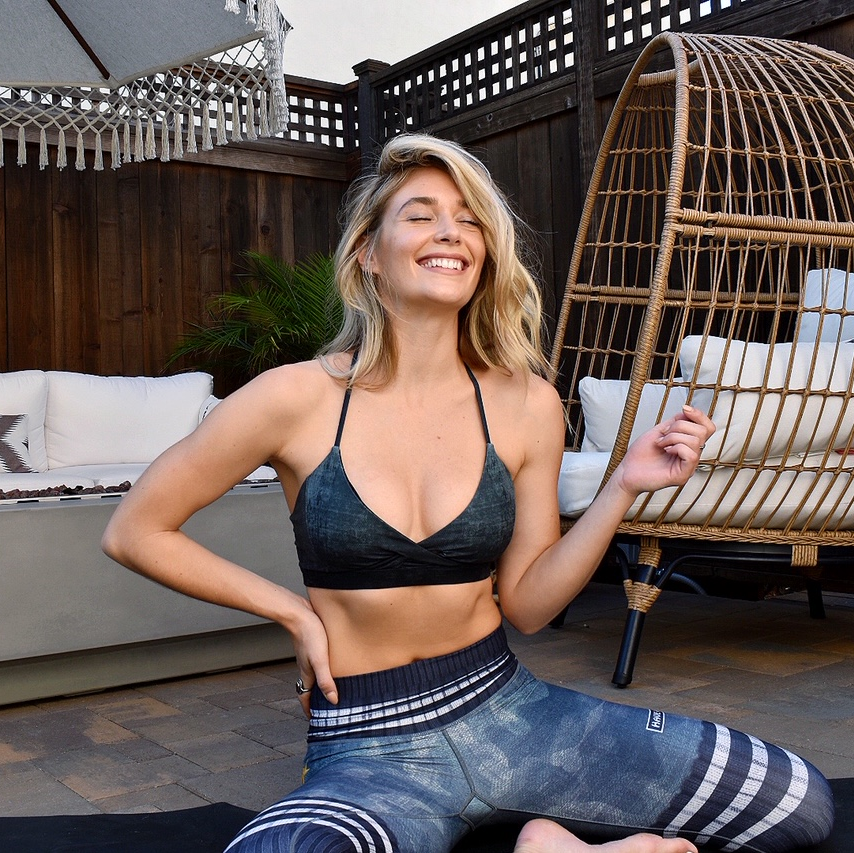
Barre is a ballet-inspired fitness practice that usually combines standing exercises at a barre with floor work and light resistance. Think small squats, heel lifts, pulses and isometric holds—aka positions you hold while your muscles keep working overtime.
Many classes move to music and use light weights, a small ball or resistance bands. A sequence might have you holding a bent-knee position, adding tiny pulses and then lifting your heels while keeping your upper body steady. Everything looks very graceful until the instructor says “hold it here” and you start shaking and internally negotiating.
No dance background required. No ballet shoes. No audition. The barre is there for support, and instructors can help you adjust your stance, range of motion and balance challenge. You can absolutely belong at the barre without ever having belonged in a ballet recital.
Practicing barre at home? Choose a beginner class and use a secure countertop or another support that will not slide or tip. Leave enough room to move comfortably. The upside: full control of the playlist. The downside: you’re also in charge of showing up.
Pilates vs. Barre: How the Workouts Compare
Class styles vary, but these are the differences you will commonly notice:
| Feature | Pilates | Barre |
| Main focus | Whole-body control, core engagement and alignment | Muscular endurance, balance and sustained muscle work |
| Common equipment | Mat; reformer in equipment-based classes; optional small props | Barre, mat, light weights, ball or resistance bands |
| Movement style | Coordinated, controlled movements through varied ranges | Small repetitions, pulses and isometric holds, often mixed with larger movements |
| Intensity feel | Challenge from precision, leverage, resistance and stability | Gradually building muscle fatigue during repeated movements and holds |
| Balance and stability | Maintaining alignment while limbs or equipment move | Controlling standing positions, heel lifts and transitions |
| Footwear | Bare feet may be allowed for mat work; grip socks are commonly required for reformer classes | Grip socks are frequently used or required; studio policies vary |
| Beginner considerations | Introductory instruction is especially useful for reformer setup | Learn the positions first and adjust the range of motion or hold duration |
Both workouts can involve your core, upper body and lower body. And neither is automatically easy just because the movements look small. If you’ve ever underestimated a two-pound weight in barre, you already understand!
Is Pilates or Barre Harder?
Neither is universally harder. Difficulty depends on the class format, instructor, resistance, pace and your own strengths.
Pilates can feel demanding because of the precision involved. Moving one leg while keeping your trunk steady requires concentration and control, especially when you add resistance or a moving carriage. It may look calm from across the room. Your internal monologue may be less serene.
Barre often feels challenging because one muscle group stays active for a long time. A light weight or tiny pulse may seem manageable at first, then become a whole situation as the repetitions build. And yes, “eight more” can feel suspiciously long when you’re the one holding the position.
If you enjoy sustained holds, barre may feel familiar. If you like carefully coordinated movement, you may connect with Pilates sooner. Neither feeling proves one workout is more effective. Choose a level where you can maintain your form, breathe comfortably and take breaks when needed.
Which Is Better for Beginners?
Both Pilates and barre can work well for beginners. The more useful question is not “Which is easier?” but “Where will I get the instruction and support I need?”
Choose beginner mat Pilates if you want an introduction to controlled movement with minimal equipment. Look for introductory reformer Pilates if the equipment interests you; learning the springs, straps and carriage with an instructor is part of getting started.
Choose beginner barre if you enjoy a group-class rhythm and standing exercises with support nearby. You can usually make a sequence more manageable by reducing the movement, lowering your heels or taking a break. Modifications are part of the workout, not a confession. Take them whenever you need them.
Before booking, check the class level, ask whether equipment instruction is included and arrive early enough to tell the instructor you are new. If you have an injury or a condition that affects exercise, ask an appropriate healthcare professional about restrictions and discuss modifications with your instructor.
Do You Need Grip Socks for Pilates and Barre?
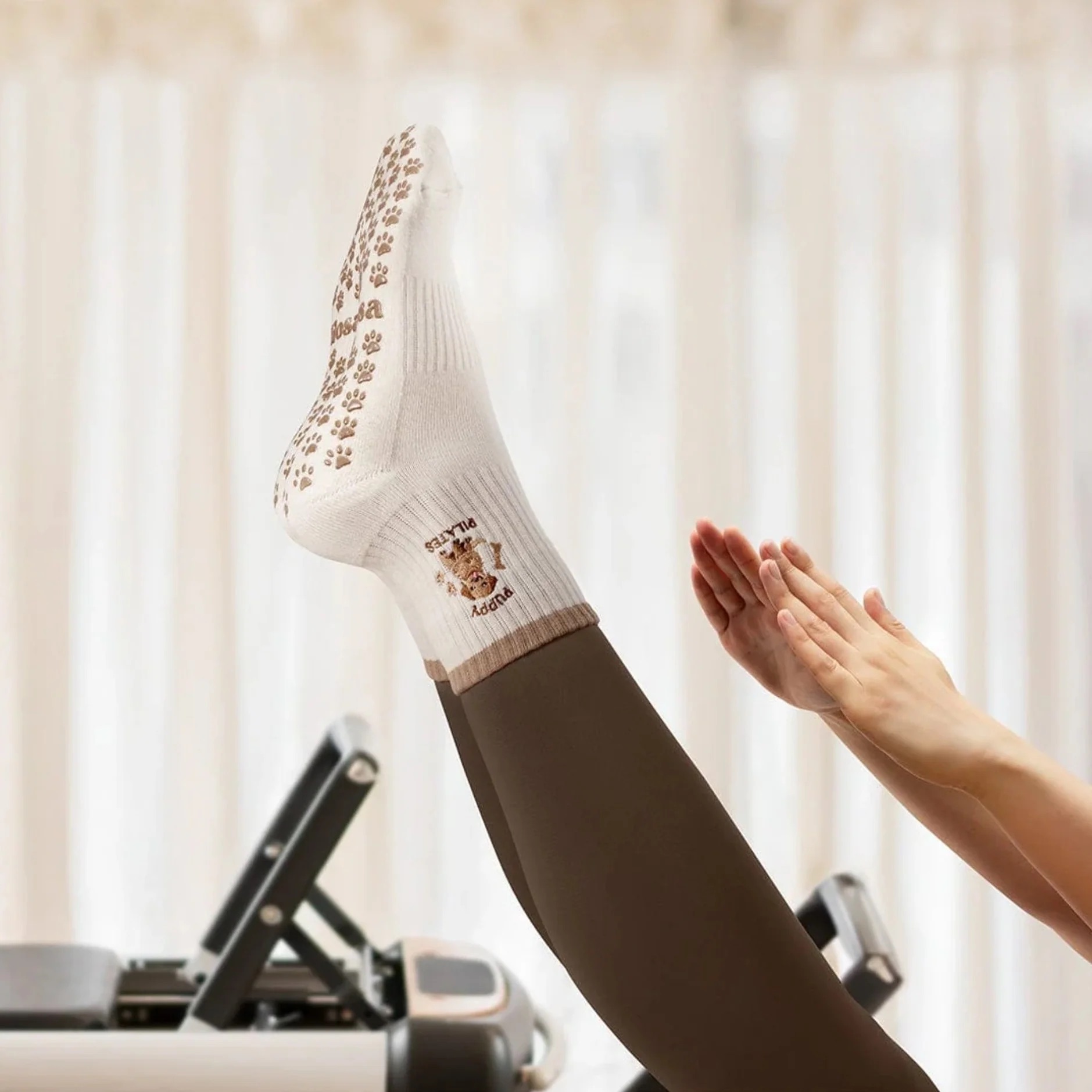
Often, yes—but check your studio’s policy before your first class. Some mat Pilates classes allow bare feet, while many reformer Pilates and barre studios require grip socks.
Grip socks have textured soles designed to add traction where your feet contact the floor or equipment. That matters when you’re holding a standing position, transitioning between exercises or placing your feet on a reformer surface. Regular smooth-soled socks may slide on those same surfaces. We’re here for controlled movement, not an unplanned skating routine.
Fit matters as much as the sole. If the sock twists around your foot, its grip may no longer sit where you need it. A secure pair should feel comfortable without bunching, slipping at the heel or squeezing your toes.
Grip socks are an accessory, not a guarantee against slipping or a replacement for proper technique. Follow your instructor’s guidance and keep contact surfaces clean and dry.
What to Look for in Pilates Grip Socks
When choosing Pilates grip socks, look for:
- A snug, non-twisting fit: Check the brand’s size chart rather than assuming all socks fit alike.
- Traction across the sole: Grip should be positioned where your foot makes contact during class.
- Breathable fabric: Look for a comfortable fabric blend, especially if your feet tend to get warm.
- Appropriate coverage: Choose a style that stays secure during reformer work and meets your studio’s requirements. Check before choosing an open-toe design.
Ankle and crew styles can both work. Start with fit and studio requirements, then choose the silhouette you love. Practical can still have a cute little ruffle.
Explore Pilates grip socks to compare coverage, sizing and styles.
What to Look for in Barre Grip Socks
For barre grip socks, prioritize traction through both the forefoot and heel. Standing work can shift pressure between these areas as you move through heel lifts, supported positions and transitions.
A stay-put heel and comfortable cuff are also useful. You’re already keeping track of your posture, your heels and what comes after this pulse. Babysitting your socks does not need to be another task. Breathable fabric and seams that feel comfortable underfoot help round out the fit.
Browse barre grip socks with the same practical checklist: secure fit, well-placed grip and comfort in motion.
Can You Wear the Same Grip Socks for Both?
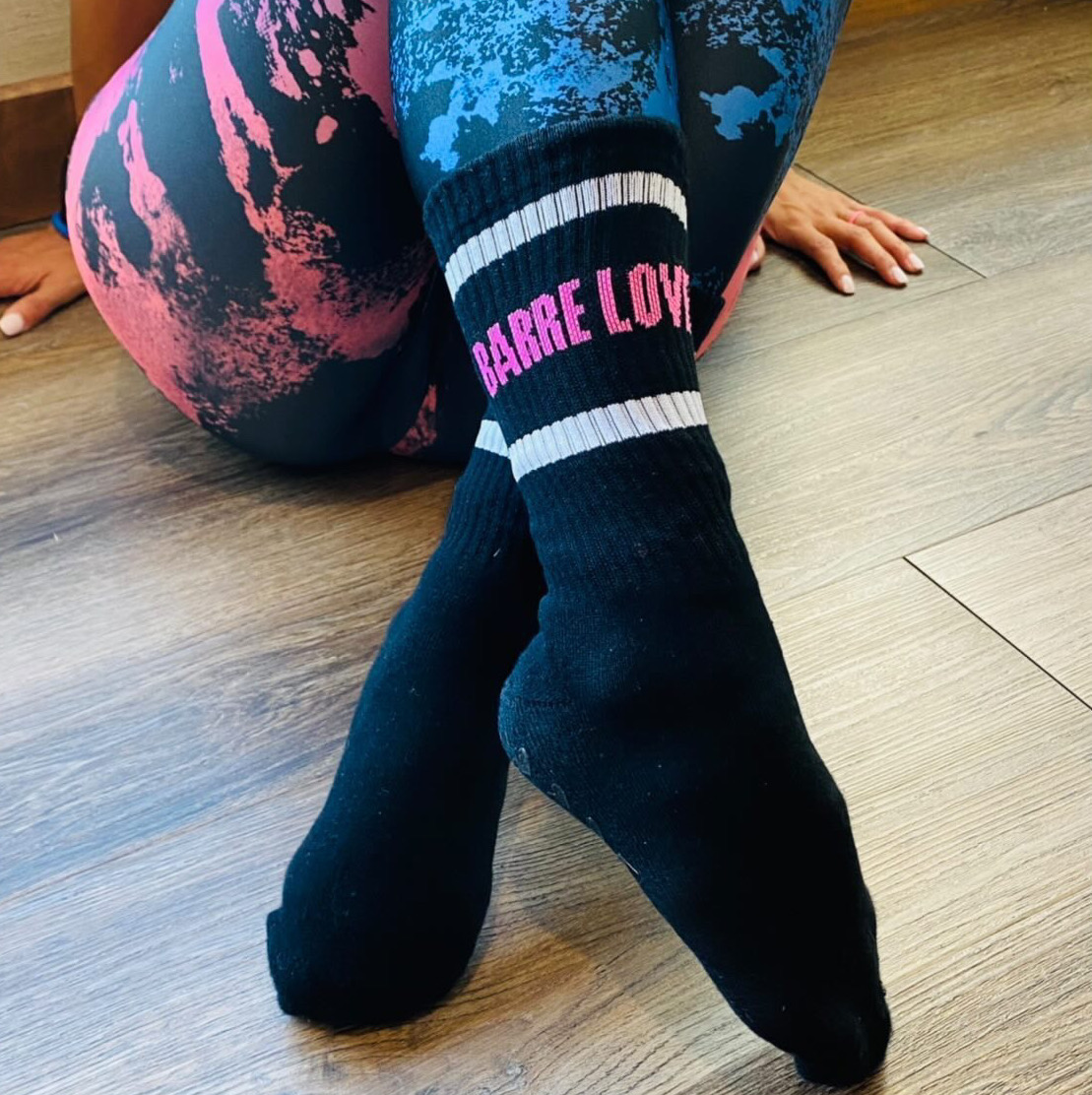
Yes—you can often wear the same grip socks for Pilates and barre, provided they fit securely, have reliable sole traction and meet both studios’ rules.
The workout label matters less than how the pair performs on your feet. You do not automatically need separate socks for each class. A second pair because laundry exists? Sensible. A second pair because the color matches your favorite set? We understand that too.
Follow the care instructions for your specific socks, and replace pairs when the grip wears down or the fit becomes loose.
Pilates or Barre: Which Should You Choose?
Choose based on the experience you want, not which workout wins the group chat debate. Here’s your cheat sheet:
- Want controlled, core-focused movement? Start with Pilates.
- Curious about springs, straps and a moving carriage? Try an introductory reformer class.
- Enjoy music, standing sequences and sustained muscle work? Give barre a try.
- Prefer exercising at home? Mat Pilates and barre both offer options with relatively little equipment.
- Want variety? Combine the two, allowing recovery time based on how challenging your classes feel.
You don’t have to choose a forever team after one session. Try a beginner class in each and notice which teaching style, pace and movements make you want to come back. Being a barre girl with a reformer reservation is entirely allowed.
Once your class is booked, let’s make the getting-dressed part easy. Shop grip socks for Pilates and barre and find your stay-put, feel-good, very-you pair. We can’t make those last eight counts shorter. We can help with the socks.
Frequently Asked Questions
Does Pilates or barre build more strength?
Both can help develop strength, particularly when you are new to exercise, but results depend on resistance, progression and consistency. Pilates often emphasizes strength with movement control, while barre commonly emphasizes muscular endurance through repeated movements and holds. If your priority is substantial muscle or maximal-strength gains, progressive resistance training may be a more direct fit than relying on either class alone.
Is barre similar to Pilates?
Yes. Both emphasize deliberate movement, alignment and core engagement, and barre classes may include Pilates-inspired floor exercises. The difference is in the structure: barre typically features ballet-inspired standing positions, repetitions and holds, while Pilates follows its own movement approach using a mat or specialized equipment.
Can beginners do Pilates or barre?
Yes. Look for introductory or foundations classes, tell the instructor you are new and use the modifications offered. A beginner-friendly class with clear instruction matters more than choosing one workout over the other.
Do I need different socks for Pilates and barre?
Usually not. One pair can work for both if it fits securely, provides suitable traction and meets the studio’s footwear policy. Check for any coverage or style requirements before class.
Can Pilates grip socks be used for barre?
Yes. Pilates grip socks can generally be used for barre when they stay in place and provide grip under the forefoot and heel. Focus on their fit and construction rather than the name on the product listing.